
Gästrecension
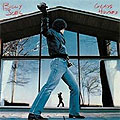
- Glasshouses (LP) Billy Joel
- 1980
- Columbia/Sony
A Story of an Under-Appreciated Classic
Lyssna
Externa länkar
- Billy Joel
- Webben. Här kan du lyssna på skivan.
- Chicano
- Webben.
As the late-1970s became the early-1980s, punk had taken its brief but vice-like grip on the end of the decade – launching a concerted effort to steal bucks from the bloated pockets of the likes of Yes and Genesis – and consequently given way to post-punk and New Wave. That's an old story. At the same time in Hollywood, a young punk was about to release his fourth movie. In appearance and budget, George Lucas was as decidedly unpunk as you could get, but with a vision and need for change as revolutionary as you can get, ”Star Wars” changed the movie-going world forever. That's an old story too.
Meanwhile, a certain Ramone was busy producing his first album for a certain New York native. But this was Phil Ramone, hot off the heels of producing solo hits for Paul Simon and Art Garfunkel. And to stretch the disassociation from Dee Dee, Joey, Johnny and Tommy even further, this Ramone was about to start work on a certain Billy Joel's new album, ”The Stanger”. To find an artist less in tune with the punk aesthetic, you'd have to cross the pond to Joel's spiritual mentor, Wings' Paul McCartney.
”Strangers” dealt in radio-friendly, piano-led soft rock ballads (”Just the Way You Are”), theatrical flourishes (”Scenes from an Italian Restaurant”) and even French troubadour-style laments (”She's Always A Woman”). That's not to say that it wasn't a classic album, standing today as irrefutable proof of Billy Joel's near-untouchable gift for, and love of, pure radio melody. However, it was undoubtedly light, sheened with the hit-making prowess of Phil Ramone's studio gloss. And the critics treated it as such: soft-rock fluff.
In 1980, as ”The Empire Strikes Back” swathed through cinemas, the era ushered in a new wave of young musicians grown up on punk. Covering everyone from The Police and The Pretenders, XTC and Squeeze, to singer-songwriters like Nick Lowe, these New Wave groups had punk's eye for a gimmick or stunt, but added a crucial ear for melody, and groups like The Cars had an almost unashamed eye on the radio and its charts, yet with the accompanying critical acclaim to boot.
This was the point at which Billy Joel, working again with Ramone, provided his late, great answer to punk and its attendant critics, and made an accidental entry to the list of New Wave's finest LPs, ”Glass Houses”. It would be the last time he was this good.
Billy Joel had the format licked; when not writing drippy love songs, his humble beginnings and blue collar righteousness had suffused anger into many of his songs, such as ”Turnstiles'” bitter ”Angry Young Man” and ”Streetlife Serenade's” venomous ”The Entertainer”. A fan of Springsteen's anger anthems and a musical magpie who could turn his ear to any musical style he fancied, now was the time to shut down the detractors who saw him as a hit-chasing balladeer.
Opening with the sound of shattering glass, its as if Joel has seen his career thus far as a fragile entity which he alone had the power to break and rebuild. Like a true statement, opener ”You May Be Right” brings the fighting talk, Joel ”crashing your party” and ”stranded in a combat zone”, its stomping toms and wiry riff the equal of Television. ”Sometimes a Fantasy” carries the torch further with its stop-start stabs of guitar shamelessly stolen from The Cars' ”Just What I Needed”, released two years previously. He may have been somewhat late, but he sure could imitate (”I Don't Want To Be Alone” could be a lost Elvis Costello classic).
Perhaps the best songs are those with some precedent to today's sounds, and indeed, the paranoid ”Its Only Rock and Roll to Me” would trouble pole position in any era's charts. Its Joel with his intentions in the open and wearing his tongue firmly in his cheek as he asks: ”What's the matter with the clothes I'm wearing, can't you tell that your tie's too wide?” A cynical jab at the vagaries of fashion and hip sounds, all wrapped up in his appropriation of a New Wave classic, where all you need ”are looks and a whole lotta money/It's the next phase, new wave, dance craze but anyways …”, its all rock and roll to Billy Joel. You can't help but draw a close parallel to the present day, where magazines once more rule the new sound and where, likewise, ”you can't dress trashy 'til you spend a lot of money”. Similarly applicable to today's fans, the run-out of ”Sleeping with the Television On” has Joel appropriating Jonathan Richman at his sleepiest, and by association cloning The Strokes' Julian Casablancas twenty years early.
His defiant pose on the cover, hands clasped around the rock he is presumably about to propel through the plate glass house in front of him, showed Joel was nothing if not literal about his intentions on this album. He could prove that he could change direction at will and flirt with fashionable and critical acclaim with the best of them. And if he had to break something while doing it, who cared? And if the album doesn't quite bring the glass shards of his reputation shattering down around him or declare him a card-carrying punk rocker – it does still carry the sheen of a mega-production, after all – it does show that Billy Joel can and did rock with the best of them.
In truth, though, only half of this album can be described as pure New Wave; as on all his albums, Joel can't help but mix his styles, stirring in hard rock and ballad sensibilities with the synth-and-guitar led hits. Though this time he almost makes it all the way to the end without letting his inner-Beatle out, he can't resist undoing all his good work by closing with the pure slice of McCartney that is ”Through The Long Night”, whilst earlier slips include one back into French Troubadour mode on the throwaway ”C'Etait Toi (You Were The One)”. In many ways, this simply serves to break the album up, giving the more traditional Billy Joel fans a break from the ”harder” stuff, but at the same time it can't help but feel like Joel the talented musician showing off his breadth of style. It doesn't make for a thematically perfect ride, but the strength of the melodies make it impossible to be disappointed, and removed from its context by over 20 years, ”Glass Houses” sounds as fresh and modern as the best of the era, standing out as both his most under-appreciated, and finest, hour. And until it becomes fashionable to hail Billy Joel a legend trailing a handful of classic albums, that's a new story.
Publicerad: 2004-02-07 00:00 / Uppdaterad: 2004-02-07 00:00
10 kommentarer
Jaså. På engelska..
#
bla
#
Killen försöker visst rida på jackass-vågen med sin mössa och näsblod.
#
Chicano måste väl vara det enda band som klätt sin rosa vinylskiva i trosor! Prudent and neat. I like!
#
Skivomslaget är genialiskt
#
billy joel är väl inte så häftig?
eller…
#
Yes och Genesis är väl ungefär hundratolv gånger bättre än Billy Joel…
#
killen gillar rftc iallafall. det är alltid nått… typ.
#
twista då??
#
Billy Joel är klart värd att lyfta fram mer! Lyssna på hans tidiga plattor som ”The Stranger”, ”52nd Street” och just ”Glass Houses”!
#
Kommentera eller pinga (trackback).